Week 7: Citizenship
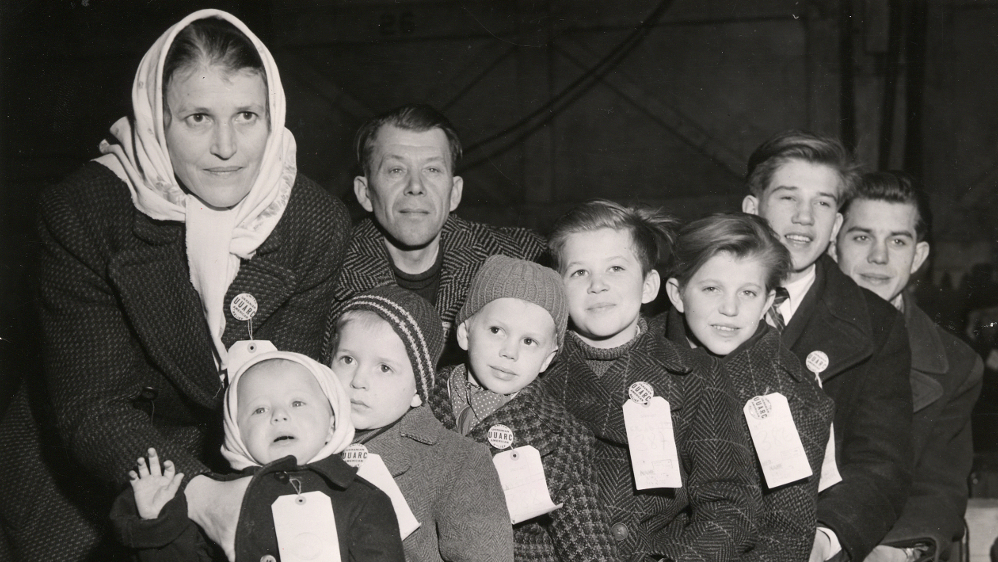
Citizenship is often depicted as an immigrant’s natural goal: a mark of successful incorporation or even assimilation. Citizenship can result in an increase in political rights and access to a protected status that enables some migrants to settle within the U.S. without fear of deportation. State production of citizenship, however, has been uneven and mediated by gender, race, and class. Many migrants who have accessed citizenship, or had citizenship ascribed to them, have faced the limits of its protections, and juridical citizenship has also functioned as a site of dispossession and surveillance. Racialized migrants and their descendants have often been precluded from accessing the fruits of legal belonging. In response, migrants have expanded the concept of citizenship through social and political actions that have focused on the inherent worth and dignity of human beings, denouncing political and legal efforts to stigmatize, detain, and deport them, and expanding the scope of their legal rights.
Scholarship
- Eiichiro Azuma, “Toward a Transnational History of Wartime Japanese Americans: Nisei and Imperial Japan’s Race Propaganda,” Journal of American Ethnic History 42, no. 2 (Winter 2023): 5–41
- Margot Canaday, The Straight State: Sexuality and Citizenship in Twentieth-Century America (2009)
- Devon W. Carbado, “Racial Naturalization,” American Quarterly 57, no. 3 (September 2005): 633–658
- Roger Daniels, Prisoners without Trial: Japanese Americans in World War II (2004)
- Hardeep Dhillon, “The Making of Modern US Citizenship and Alienage: The History of Asian Immigration, Racial Capital, and US Law,” Law and History Review 41, no. 1 (2023): 1–42
- Hardeep Dhillon and Maddalena Marinari, “Networks of Power and Relationality: US Citizenship and Migration in the Twentieth Century," Journal of American Ethnic History 44, no. 4 (2025): 5-13
- Sam Erman, Almost Citizens: Puerto Rico, the U.S. Constitution, and Empire (2019)
- Amanda Frost, You Are Not American: Citizenship Stripping from Dred Scott to the Dreamers (2021)
- Martha Mabie Gardner, The Qualities of a Citizen: Women, Immigration, and Citizenship, 1870–1965 (2005)
- Gary Gerstle, American Crucible: Race and Nation in the Twentieth Century (2001)
- Ian Haney López, White by Law: The Legal Construction of Race (1996)
- Madeline Y. Hsu and Ellen D. Wu, “Smoke and Mirrors": Conditional Inclusion, Model Minorities, and the Pre-1965 Dismantling of Asian Exclusion,” Journal of American Ethnic History 34, no. 4 (Summer 2015): 43-65
- Julia Rose Kraut, Threat of Dissent: A History of Ideological Exclusion and Deportation in the United States (2020)
- Robert C. McGreevey, Borderline Citizens: The United States, Puerto Rico, and the Politics of Colonial Migration (2018)
- Carol Nackenoff and Julie Novkov, American by Birth: Wong Kim Ark and the Battle for Citizenship (2022)
- Mae M. Ngai, Impossible Subjects: Illegal Aliens and the Making of Modern America (2004)
- Kunal M. Parker, Making Foreigners: Immigration and Citizenship Law in America, 1600–2000 (2015)
- Marla A. Ramírez, Banished Citizens: A History of the Mexican American Women Who Endured Repatriation (2025)
- Greg Robinson, A Tragedy of Democracy: Japanese Confinement in North America (2009)
- Brendan Shanahan, Disparate Regimes: Nativist Politics, Alienage Law, and Citizenship Rights in the United States, 1865-1965 (2025)
- Lorrin Thomas, Puerto Rican Citizen: History and Political Identity in Twentieth-Century New York City (2010)
- Omar S. Valerio-Jiménez, Remembering Conquest: Mexican Americans, Memory, and Citizenship (2024)
- Naoko Wake, “Asian American Disability: A History and Its Archives,” Journal of American Ethnic History 43, no. 3 (Spring 2024): 5–33
Resources
- Ex parte Endo (323 US 283), U.S. Supreme Court (primary source)
- Hirabayashi v. US Hirabayashi v. United States (320 U.S. 81, 63 S.Ct. 1375, June 21, 1943), Cornell University Law Library (primary source)
- John F. Kennedy, A Nation of Immigrants, 1963, HathiTrust (primary source)
- Korematsu v. United States, 323 U.S. 214 (1944), U.S. Supreme Court (primary source)
- Whom Shall We Welcome, U.S. President’s Commission on Immigration and Naturalization, 1953 (primary source)
- Minoru Yasui v. United States (320 US 115, June 21, 1943), Cornell University Law Library (primary source)
- Universal Declaration of Human Rights, United Nations (primary source)
- A Family Gathering (documentary)
- America and the Holocaust: Deceit and Indifference (documentary)
- “Carlos Eire: A Cuban-American Searches For Roots,” Fresh Air (author interview)
- Densho: The Japanese American Legacy Project, Densho, (multimedia website)
- Witness: The Legacy of Heart Mountain (documentary)
- The Zoot Suit Riots (documentary)
- Voces Oral History Project, The University of Texas, Austin (oral history archive)
- Hana C. Maruyama, “On Common Ground: Concentration Camps in the ‘Home of the Free’ at the Southwest Border and in History,” The Abusable Past, September 10, 2019 (public-facing article)
- Campu (podcast)
- Japanese American Internment During World War II, Digital Public Library of America (primary source set)
Week 8: Labor
Labor has long been a driving force in the history of immigration. The work of immigrants has often been the primary context for their acceptance or expulsion. When immigrants are welcome they are celebrated for their hard work and entrepreneurial spirit. When nativism and xenophobia spike, it is that same labor that makes them a threat to US workers. These histories help us understand how immigration history has been shaped by the question of labor. Corporations and governments recruited immigrant labor to the US, immigrants sought opportunities for work in the US, and the US labor market has been transformed again and again by the arrival of immigrants. The histories below chronicle the stories of these labor migrations and the experiences of immigrants themselves as they transformed the communities and industries of which they were a part. They show the various ways that immigrants arrived in the US and how they shaped and were shaped by their labor. This section documents not only the long history of immigrant labor, but also the labor activism that has benefited all US workers.
Scholarship
- David Bacon, Illegal People: How Globalization Creates Migration and Criminalizes Immigrants (2008)
- Deborah Cohen, Braceros: Migrant Citizens and Transnational Subjects in the Postwar United States and Mexico (2011)
- Lizabeth Cohen, Making a New Deal: Industrial Workers in Chicago, 1919–1939 (2014)
- Stacy D. Fahrenthold, Unmentionables: Textiles, Garment Work, and the Syrian American Working Class (2025)
- Leon Fink, The Maya of Morganton: Work and Community in the Nuevo New South (2003)
- Lori A. Flores, Grounds for Dreaming: Mexican Americans, Mexican Immigrants, and the California Farmworker Movement (2016)
- Herbert G. Gutman, “Work, Culture, and Society in Industrializing America, 1815–1919,” American Historical Review 78, no. 3 (June 1973): 531–588
- Cindy Hahamovitch, No Man’s Land: Jamaican Guestworkers in America and the Global History of Deportable Labor (2011)
- Pierrette Hondagneu-Sotelo, Doméstica: Immigrant Workers Cleaning and Caring in the Shadows of Affluence (2007)
- Moon-Ho Jung, Coolies and Cane: Race, Labor, and Sugar in the Age of Emancipation (2006)
- Manu Karuka, Empire’s Tracks: Indigenous Nations, Chinese Workers, and the Transcontinental Railroad (2019)
- Mireya Loza, Defiant Braceros: How Migrant Workers Fought for Racial, Sexual, and Political Freedom (2016)
- Sarah McNamara, Ybor City: Crucible of the Latina South (2023)
- Annelise Orleck, Common Sense and a Little Fire: Women and Working-Class Politics in the United States, 1900–1965 (1995)
- Vicki L. Ruiz, From Out of the Shadows: Mexican Women in Twentieth-Century America, 10th anniversary ed. (2008)
- Nayan Shah, Stranger Intimacy: Contesting Race, Sexuality, and the Law in the North American West (2011)
- Peter Way, Common Labor: Workers and the Digging of North American Canals, 1780–1860 (1993)
- Carmen Teresa Whalen, From Puerto Rico to Philadelphia: Puerto Rican Workers and Postwar Economies (2001)
Resources
- Bracero History Archive, Bracero History Archive (primary source collection)
- H-2 Worker (documentary)
- Harvest of Dignity, Student Action with Farmworkers (documentary)
- Mexican Labor and World War II: The Bracero Program, Bracero History Archive (oral history collection)
- Corazón de Dixie: Mexicanos in the U.S. South since 1910, Julie M. Weise (primary source collection, companion to the book of the same name)
- Triangle Fire, American Experience (documentary)